

Why power quality deserves attention
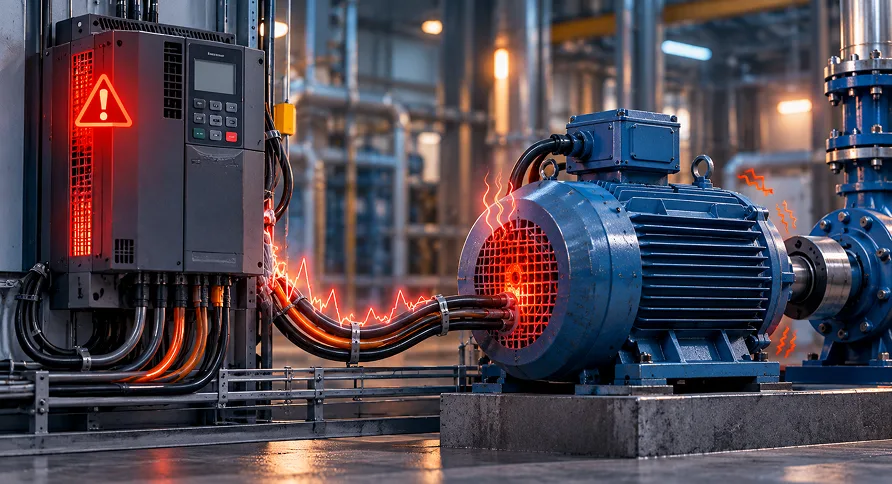
An industrial motor can keep turning even when the electrical environment around it is less than ideal. A drive may report intermittent faults, a control system may reset unexpectedly, or an electrical cabinet may experience unexplained nuisance trips. These symptoms do not automatically prove a power-quality problem, but they are good reasons to investigate the supply, load and installation together.
Power quality describes how closely electrical power at a point of use matches the voltage, frequency and waveform conditions equipment needs. In modern factories, sensitive automation, power electronics and variable frequency drives (VFDs) make it especially important to understand both disturbances coming from the supply and interference generated within the plant. The right fix depends on measurements, not guesswork.
1. Voltage sags and short-duration dips
A voltage sag is a temporary reduction in RMS voltage. Starting a large motor, switching heavy loads or faults elsewhere on a distribution network can cause a dip. Even a brief event may interrupt contactors, programmable controllers or drive operation, depending on their ride-through capability.
What to do: log voltage at the affected equipment during production, review motor-starting methods and feeder sizing, and coordinate with the utility where appropriate. For sensitive loads, evaluate ride-through, UPS or voltage-support options only after identifying the event duration and magnitude.
2. Voltage swells and overvoltage
A swell is a temporary increase in RMS voltage, while sustained overvoltage is a different operating condition. Switching events, regulation issues or abrupt load changes may contribute. Repeated exposure outside equipment ratings can stress insulation, capacitors and power supplies.
What to do: compare recorded voltage events with equipment specifications; check transformer taps, regulation and grounding arrangements. Surge protective devices address certain transient overvoltages, but they do not replace a solution for sustained overvoltage or every type of swell.
3. Harmonic distortion from nonlinear loads
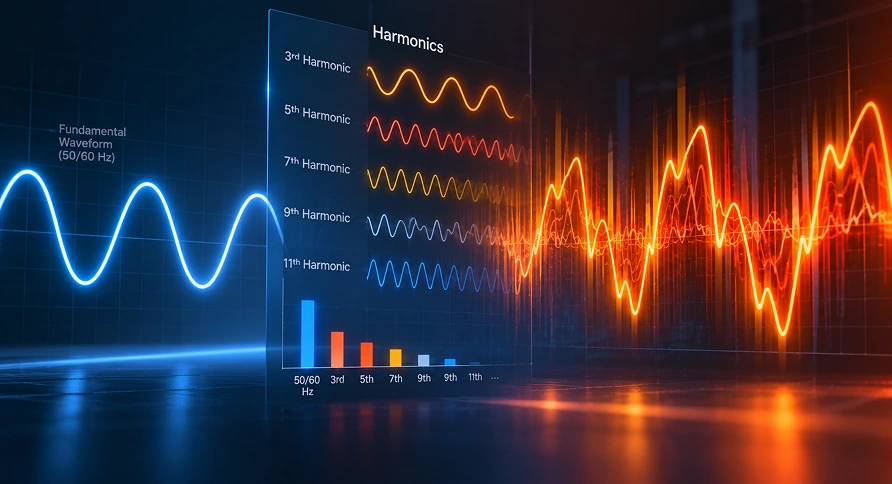
Rectifiers, VFD front ends, switched-mode power supplies and other nonlinear equipment draw nonsinusoidal current. This can distort current and, through system impedance, the voltage waveform. Excessive harmonic levels may increase losses in transformers and conductors, contribute to heating or create resonance concerns in capacitor banks.
What to do: measure total harmonic distortion and individual harmonic components at meaningful points. Depending on the installation, options include line reactors, DC-link chokes, passive or active harmonic filters, multipulse arrangements or low-harmonic drive technologies. Design should consider system impedance, load mix and applicable standards.
4. High-frequency electrical noise and EMI
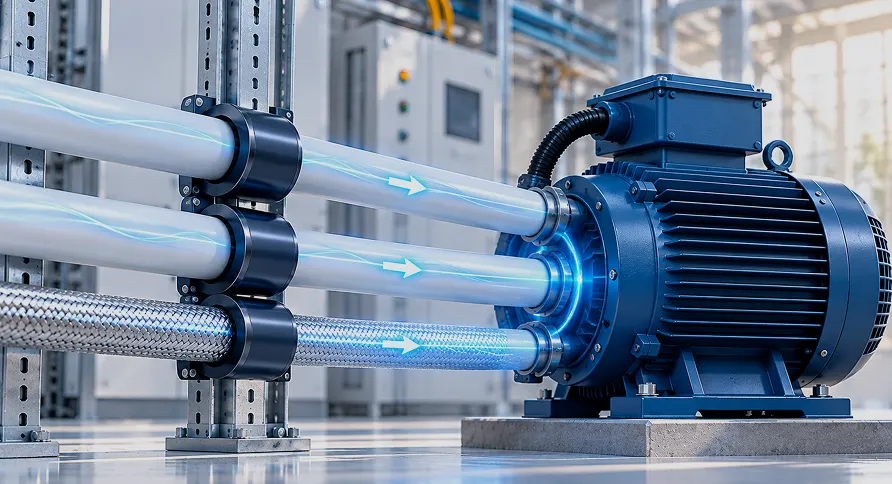
Fast-switching power electronics generate high-frequency voltage and current components that differ from conventional low-order harmonics. In VFD-driven motor systems, switching edges and parasitic capacitances can create common-mode currents, cable-shield currents and conducted electromagnetic interference (EMI). Their effects depend heavily on cable length, grounding, shielding and the equipment involved.
What to do: verify cable routing, bonding, shield termination and the manufacturer’s EMC installation guidance. Application-specific common-mode chokes, EMI filters and output filters may help mitigate particular interference paths. A nanocrystalline common-mode choke can be useful where its impedance, current rating and frequency response match the problem; it is not a universal harmonic filter.
5. Transients and switching disturbances
A transient is a rapid, short-lived change in voltage or current. Capacitor switching, inductive load interruption, contactor operation and lightning-related events are among possible sources. Some events cause visible trips; others are only apparent in high-speed recordings.
What to do: investigate the event source, assess suitable surge protection and switching practices, and ensure protective devices are coordinated. A standard energy meter may miss fast transients, so choose monitoring equipment with the bandwidth and triggering capabilities needed for the suspected event.
6. Voltage imbalance across three phases
Three-phase voltage imbalance occurs when phase voltages are unequal. Unbalanced loading, poor connections or supply-side issues can contribute. Induction motors can experience disproportionate negative-sequence currents and extra heating even when the measured voltage difference appears modest.
What to do: measure phase-to-phase voltages and currents under representative load, inspect terminals and feeders, and rebalance single-phase loads where practical. Compare readings with motor and drive manufacturer limits before deciding on corrective action.
7. Flicker, interruptions and unstable supply
Repeated voltage fluctuations can create flicker, while brief or sustained interruptions can stop a production line entirely. Welding equipment, large cyclic loads, weak feeders and network faults are potential contributors. The business impact often includes scrap, restart time and interrupted automation rather than damage to a single component.
What to do: correlate power-quality events with process logs, examine large cyclic loads and assess feeder strength. Prioritize critical circuits and evaluate appropriate backup or process ride-through measures based on the actual interruption profile.
How to diagnose power-quality problems before buying equipment
Start by defining the symptom: Which machine fails, when does it happen, and what changed? Then collect baseline electrical measurements under normal and problematic operating conditions. A power-quality analyzer can capture voltage, current, imbalance, harmonics and event timing; specialized instruments may be needed for high-frequency EMI. Review grounding, cable layout, drive settings and maintenance records alongside the measurements.
It also helps to separate three engineering questions: Is the issue a supply-voltage disturbance? Is it low-frequency harmonic distortion? Or is it high-frequency interference associated with switching? Those categories overlap in real installations, but they do not share one universal remedy. Select mitigation only after identifying the mechanism and verifying compatibility with equipment ratings and safety requirements.
Where Voxbourne Energy solutions fit
Voxbourne Energy focuses on smarter industrial electrical engineering and application-led product selection. NanoChokes nanocrystalline choke solutions can be considered for suitable high-frequency noise and common-mode interference applications. NanoFilters can address selected EMI/EMC filtering needs, while NanoDrives support industrial drive and control applications according to the product specification. Each product family serves a different purpose; a choke or EMI filter should not be presented as a substitute for a dedicated harmonic filter, voltage regulator or surge protector.
For a VFD installation, a practical review may include drive topology, motor and cable details, operating current, switching frequency, grounding method and the frequencies of concern. With those inputs, engineers can evaluate the appropriate solution rather than relying on a generic claim of “clean power.”
Practical checklist for plant teams
- Record the fault, time, affected assets and operating conditions.
- Measure supply voltage, current, harmonics and imbalance at relevant locations.
- Check VFD wiring, cable shielding, bonding and manufacturer EMC guidance.
- Match any filter or choke to its rated current, impedance and frequency range.
- Validate the result with before-and-after measurements and ongoing monitoring.
Frequently asked questions
What is the most common power quality problem in a factory?
There is no single answer across all facilities. Voltage dips, harmonic distortion, imbalance and switching-related interference are all common investigation areas; the dominant issue depends on the plant’s loads and supply.
Can a VFD cause harmonics and high-frequency noise?
Yes. The rectifier stage can draw harmonic currents, while the inverter switching stage can create high-frequency components. They are distinct phenomena and may require different mitigation.
Do nanocrystalline chokes improve motor reliability?
A correctly selected choke can help attenuate specific high-frequency currents or interference paths. Reliability outcomes depend on the actual root cause, installation and system design.
Are EMI filters the same as harmonic filters?
No. EMI filters are designed for electromagnetic interference over specified frequency ranges; harmonic filters target lower-frequency harmonic distortion in the power system.
How should a plant choose a power quality solution?
Begin with measurement and root-cause analysis, then confirm ratings, applicable standards, installation requirements and performance with the supplier or qualified engineer.
Build a more reliable electrical system with Voxbourne Energy
Electrical reliability begins with knowing what is happening in your plant – not just adding components. Whether your challenge involves VFD-related interference, filtering requirements or drive applications, Voxbourne Energy can help you explore an application-appropriate approach. Discover our industrial solutions at www.voxbourneenergy.com and contact our team to discuss your system requirements.
References and further reading
- S. Department of Energy – Advanced Manufacturing Office, motor systems resources: https://www.energy.gov/eere/amo/motor-systems
- IEEE Std 1159 – Recommended Practice for Monitoring Electric Power Quality (standard overview): https://standards.ieee.org/
- IEC 61000 series – Electromagnetic compatibility standards (overview): https://webstore.iec.ch/
- Fluke – Power quality learning resources: https://www.fluke.com/en-us/learn/blog/power-quality
- Schneider Electric – Power quality and harmonics educational resources: https://www.se.com/ww/en/work/solutions/power-quality/
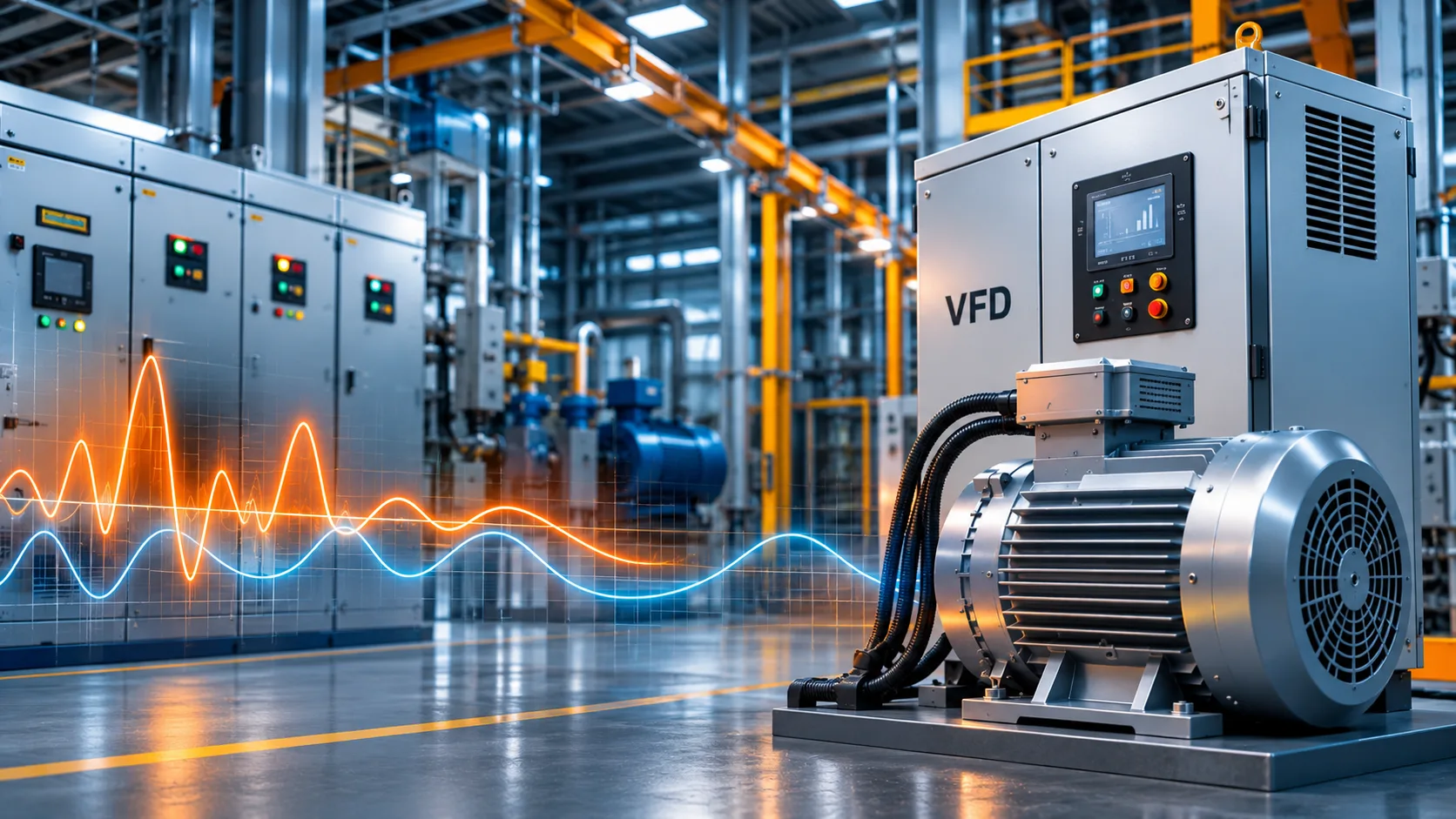
Editorial note: Product suitability and performance depend on measured conditions, equipment specifications and correct installation. The featured image is illustrative, not a wiring diagram.